
Holiday Villa vs. Long-Term Home: The Mistake to Avoid When Moving to Bali
The number one mistake people make when moving to Bali long term: they choose their villa like they're booking an Airbnb for four days. Beautiful, open-concept, full of Instagram potential — and completely impractical for actual life. This article explains the real difference between a holiday villa and a long-term home in Bali, and how to choose a place that still feels good in month 8, not just week one.
Holiday Villa vs. Long-Term Home: The Real Difference
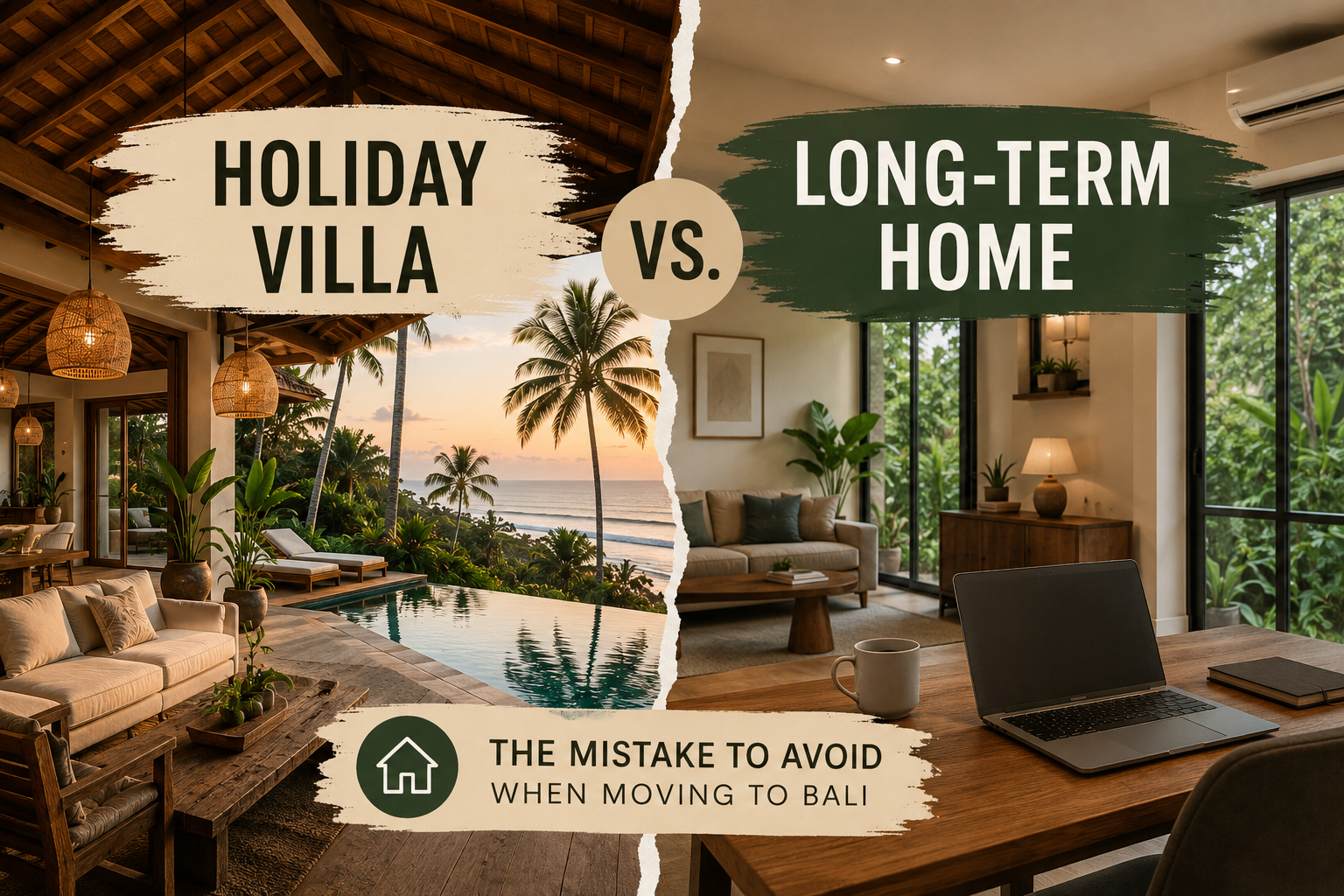
A holiday villa in Bali is designed to look incredible for short stays. Kitchen, living room, sometimes even bathrooms are open to the outdoors. Massive ceilings. Minimal walls. Tropical, immersive, photogenic. For four days, it's paradise. For four months, it's a different story.
A long-term home in Bali needs to handle humidity, heat, insects, noise, rainy season, daily cleaning logistics, work-from-home needs, storage, and the simple reality of cooking dinner during a storm. These are not the same product.
What Actually Matters for Long-Term Living
1. Humidity Control
Bali's humidity averages 80%+. In an open-concept villa, electronics suffer, clothes mildew, books warp. A long-term home needs sealed rooms with reliable air conditioning, especially in the bedroom and office area.
2. Insects and Open Layouts
Open kitchens look amazing in photos. Then the geckos, ants, and mosquitoes arrive. A long-term villa should have a properly enclosed kitchen and well-screened bedrooms.
3. Rainy Season Reality
From November to March, expect serious tropical downpours. An open villa floods quickly: water inside, slippery floors, outdoor furniture ruined. A long-term home needs covered access between rooms, proper drainage, and indoor-outdoor flow that survives a storm.
4. Air Conditioning and Power
Make sure AC is installed in every bedroom and at least one common area. Check the electricity capacity (KVA), many older villas struggle to power AC + appliances + fast Wi-Fi simultaneously. Also confirm there's a backup option for short outages.
5. Storage Space
Holiday villas typically have minimal storage. Long-term living means clothes for two climates, kitchen supplies, work materials, sports gear (surfboards, yoga mats, scooter helmets). A villa with proper closets, pantry space, and at least one extra storage room makes daily life much easier.
6. Noise
Roosters, scooters, ceremonies, dogs, construction. Visit the villa at different times, morning, afternoon, evening, and ideally on a Sunday. Quiet at 11 AM doesn't mean quiet at 5 AM.
The Moment of Truth: Rainy Season
Everyone falls in love with wide-open villas during dry season. Then November comes. The roof leaks. The wind blows water across the living room. The outdoor lounge becomes unusable for four months. Half the kitchen is wet. This is when people understand the gap between holiday villa and home.
How to Pick the Right Long-Term Villa
A long-term villa in Bali should be beautiful — but above all, practical, sealed where it needs to be, and designed for the way you actually live. The best ones combine tropical aesthetic with functional design: enclosed bedrooms, sheltered indoor zones, working AC, real storage, and quality finishes that age well.
Get My Home filters villas specifically for long-term suitability: rainy season readiness, AC quality, storage, internet reliability, and noise rating. So you don't fall for the 4-day version of a villa you're about to live in for 12 months.
Browse villas in Bali built for long-term living, not just Instagram — only verified properties on Get My Home.